Blog Post
Women community health workers deserve gender equity. Here's how we're showing up for them.
We are the Ethiopian government’s leading partner in innovating training for a community health workforce of more than 40,000.
Ethiopia—Africa’s second-largest country, and home to 120 million people—has seen exciting improvements in health outcomes for mothers and children over the past two decades. The country’s national community health program has been crucial to this progress, with a workforce of more than 40,000 women delivering primary care since the program’s launch in 2006. But urgent challenges remain, especially in meeting the growing burden of communicable and non-communicable diseases as well as strengthening maternal and newborn health. The Ministry of Health recognized a key opportunity: improve training for community health workers to equip them to provide better care to patients at the last mile. To do this, the Ministry needed a partner with a demonstrated ability to deliver cost-effective, efficient training for strong gains in knowledge and skills, as well as expertise in leveraging digital tools to boost learning and engagement. They chose Last Mile Health—and today, we’re working side by side to innovate community health worker training and drive better patient care across Ethiopia.
COMMUNITY AND FRONTLINE HEALTH WORKERS
served by Last Mile Health and the Ethiopia Ministry of Health

average post-training skills assessment passing rate
among community health workers and supervisors in 2025
REDUCTION IN TRAINING COST
for our pilot blended learning training cost compared to traditional face-to-face training
Guided by the Ministry of Health’s needs, we’re focused on improving skills and supervision for Ethiopia’s community health workforce. We first worked with the Ministry in 2020 to develop a COVID-19 learning app for community health workers, and its success led the Ministry to partner with Last Mile Health to transform the way community health workers receive their broader training. Together, we developed and launched an innovative blended learning training that leverages both in-person and digital elements to make content engaging, effective, accessible, and culturally sensitive—all while reducing training costs by nearly 40%. Our pilot module addressed the area of most urgent need: reproductive, neonatal, maternal, and child health. After the training, skills assessment scores improved dramatically, rising from 60% to 90%.
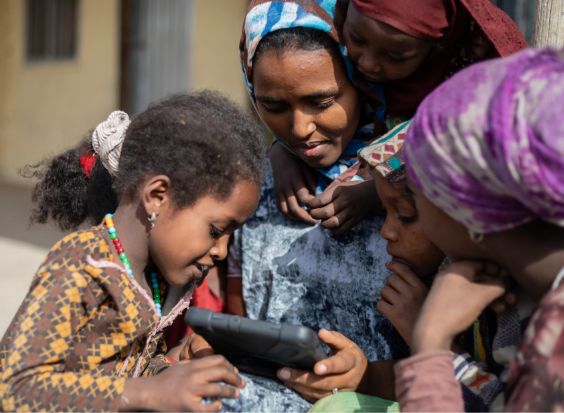
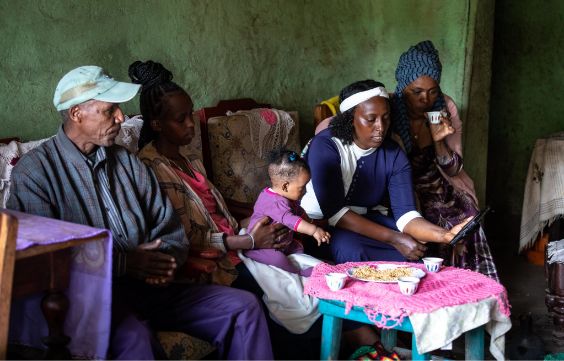
The pilot module’s demonstrated success led the Ministry to adopt the blended learning approach for all community health worker training. Alongside the Ministry, we have adapted all training modules into the format, and we are working to scale it to the entire community health workforce.
To support community health workers addressing challenging cases at the point of care, we have launched an innovative new project with the Ministry: HEP Assist, an AI-powered call center that offers standardized clinical guidance, equipping community health workers to make decisions for treatment and referral.
COMMUNITY HEALTH WORKER SPOTLIGHT

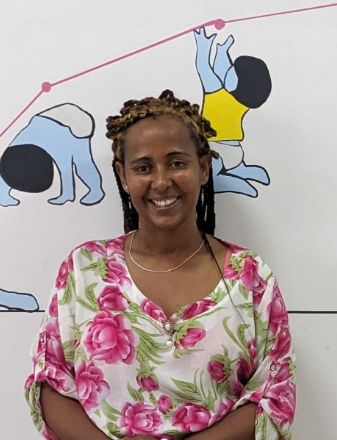
In the blended training, I got plenty of knowledge on how to practically implement change. The videos are very helpful. You can watch them again and again and perfect it—you can see all the steps and procedures. We were given an assignment to work with one child during the training. This helped us to practice what we were learning and integrate it into our actual work. There is no way to compare this to our previous training—it’s simply better for us in every way.”
– SERKALEM GETACHEW
A community health worker in Amhara Region, Ethiopia
Blog Post
Women community health workers deserve gender equity. Here's how we're showing up for them.
Blog Post
Advancing health innovation at the 2025 International Conference on Primary Health Care
Blog Post
Can AI and digital learning transform community health worker upskilling in Ethiopia?
Blog Post
Policy brief: Community health workers are ready to take on non-communicable diseases
To bring a health worker within reach of everyone, everywhere.
SUPPORT OUR WORK >