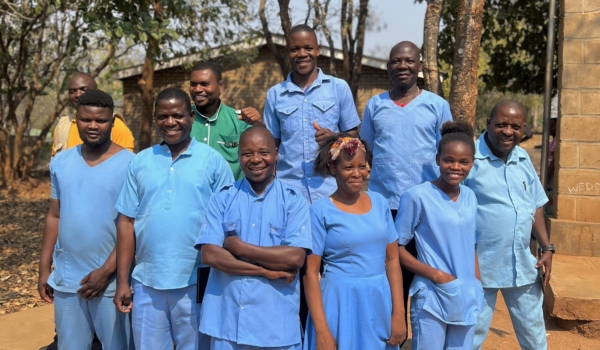
Last Mile Health works hand in hand with ministries of health to design and implement high-quality, high-impact community health programs that address governments’ most urgent health priorities and advance universal health coverage. At the core of this approach is ensuring governments can own and manage these programs in the long-term.
Government-led community health systems are best equipped to realize sustainability and durability, resulting in higher-quality care and health outcomes for all people served. Last Mile Health’s approach ensures governments are the driving force behind their community health programs, and our geographic areas of operation are guided by our ambition to catalyze exemplary government-led community health systems in low and middle-income countries. Together, we demonstrate what’s possible by improving performance and reducing the cost of community-led primary care—and then scaling what works nationally.
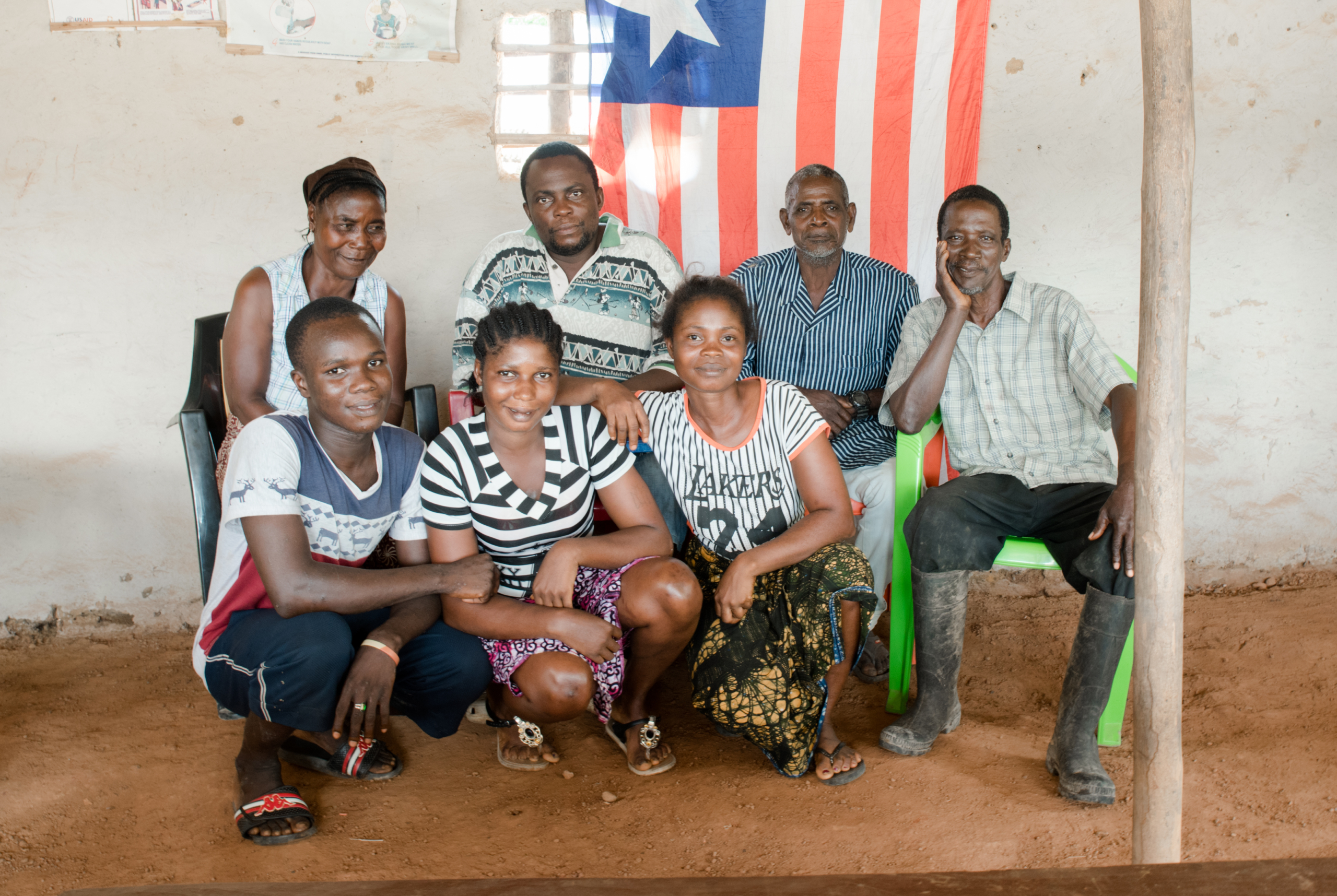
Community health workers in Grand Gedeh County.
In Liberia, Last Mile Health’s work began with a pilot community health worker program that would help shape the launch of the National Community Health Program in 2016. As the program scaled, Last Mile Health directly managed its implementation in three counties. Today, we are proud to share that we have transitioned its direct management in Grand Gedeh and Grand Bassa Counties: a key milestone toward government ownership and sustainability.
Building a foundation for government ownership
Community health programs are only successful if their gains in healthcare quality and access can be sustained—and to do this, governments must be able to manage them independently.
“The entire design of Liberia’s National Community Health Program has always been with the mindset that it would be managed by the government,” explains Brittney Varpilah, Last Mile Health’s Liberia Country Director.
When Liberia’s Ministry of Health launched the program in 2016, they initiated a “one partner, one county” approach, where in each county one NGO would directly implement the program. As implementing partner in Grand Gedeh, Grand Bassa, and Rivercess counties, Last Mile Health worked in direct coordination with the county health teams (the Ministry’s county-level staff), providing human and financial resources to ensure the program’s implementation aligned with its design while also evaluating its impact. From the start, transition to government ownership served as both a goal and a guide.
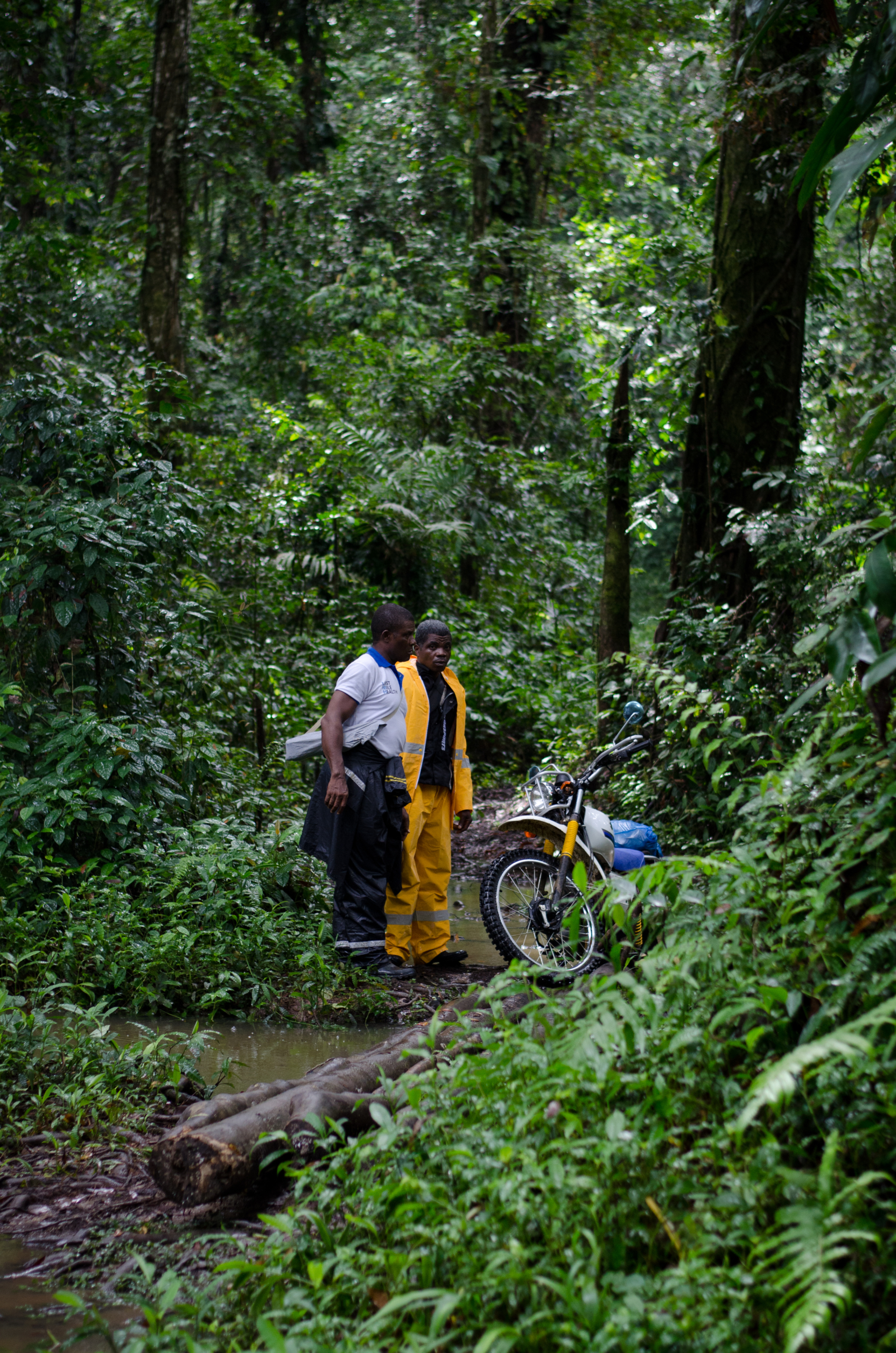
Reaching the last mile in Grand Gedeh County.
Long before the formal dates for handover in Grand Gedeh and Grand Bassa counties, the Ministry and Last Mile Health were working together to identify potential challenges and develop approaches to address them. “Every one of Liberia’s 15 counties has its own strengths and challenges, and successfully transferring management depends on understanding that particular county and its health team. We tailor our transition approach to the specific needs of counties,” says Brittney. “In Grand Bassa, for instance, we focused on strengthening the supply chain and improving monitoring and evaluation, as those were the two areas we recognized needed the greatest support.”
To date, Last Mile Health remains the Ministry of Health’s leading community health partner, providing technical assistance at the national level (and, as of 2026, continuing to support direct management in Rivercess County). While this high-level support continues, the day-to-day operations in Grand Gedeh and Grand Bassa are now fully in the hands of the county health teams. “Practically, the county health teams are doing the work now,” Brittney says. Still, she adds, staying available for support and troubleshooting is essential to a smooth transition. “If we see past challenges coming back up, we can help the county health team determine how to get back on track.”
Although each county’s needs are distinct, the handover in Grand Gedeh offered valuable insights into potential challenges in the transition process itself. “Our first experience handing over county management allowed us to see the granular details that could raise issues,” says Brittney. “We identified areas where essential tasks were needed to maintain services, simplified the administrative work for these tasks, and developed clear guidelines for the county health team to follow as we handed them over—the sooner the better. In Grand Bassa, this has helped the process go much more smoothly.”

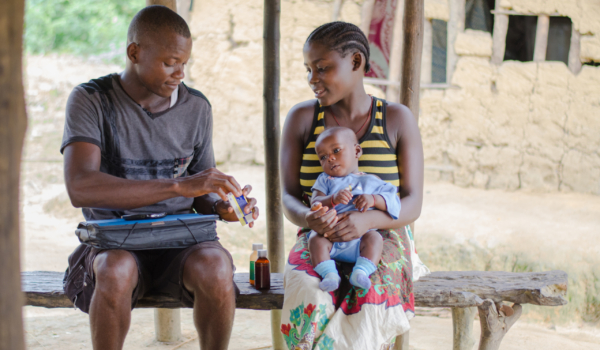
A community health worker visits a patient in Grand Bassa County.
Overall, says Brittney, the process of intentional government transition has helped set a standard for what the National Community Health Program can accomplish. “Initially, direct management allowed us to understand the standard the program can achieve when the right resources are in place,” she says. “It helped us mitigate potential challenges and show the true impact the program can have under more ideal conditions. No transition will be perfect, but we have a baseline of what’s possible so we understand what dips in services are reasonable to expect and how to support county health teams to achieve that level of care.”
Looking ahead: Government accompaniment to drive program improvement
Today, Last Mile Health’s primary role in Liberia is as a national technical partner to the Ministry of Health. We accompany the government to monitor, evaluate, and strengthen the National Community Health Program across the country, working to drive improvements in quality and reach. This work includes a focus on resource mapping and mobilization for the program as a whole: a critical step in addressing financing challenges. “The county health teams have the willingness and readiness to drive progress, but sustainable long-term financing remains a challenge,” says Brittney. “Resources are the limiting factor.”

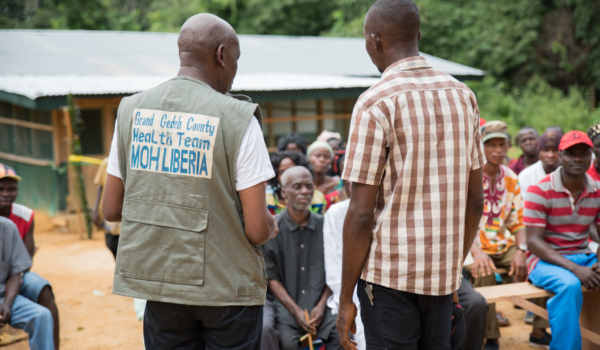
County health team members speak to a community gathering in Grand Gedeh.
Technical assistance helps advance sustainability while ensuring governments remain in the driver’s seat. It facilitates shared alignment around a vision for the future, helping partners work jointly toward honing resilient and high-impact programs while working toward durable financing solutions. “In Liberia, we’ve been a consistent partner in advocacy and in movement toward greater government management of the program,” says Brittney. “Our longevity, context, and shared vision with the government has allowed this.”
Looking ahead, she says, “We’re moving away from being a direct implementer to serving as a national technical partner, honing the innovation of the National Community Health Program and determining what it can achieve. The program is ten years old and well-established. Its value and impact are clear. Now, we’re working to guarantee this impact can be sustained through financing, donor engagement, and advocacy, while keeping an eye on innovation to ensure the program continues to meet the evolving needs of the Liberian people.”