Dear partners,
It’s International Women’s Day, and I’m choosing hope. I am inspired by the women who ensure health remains a human right and the people and communities who advocate and support them to do so.
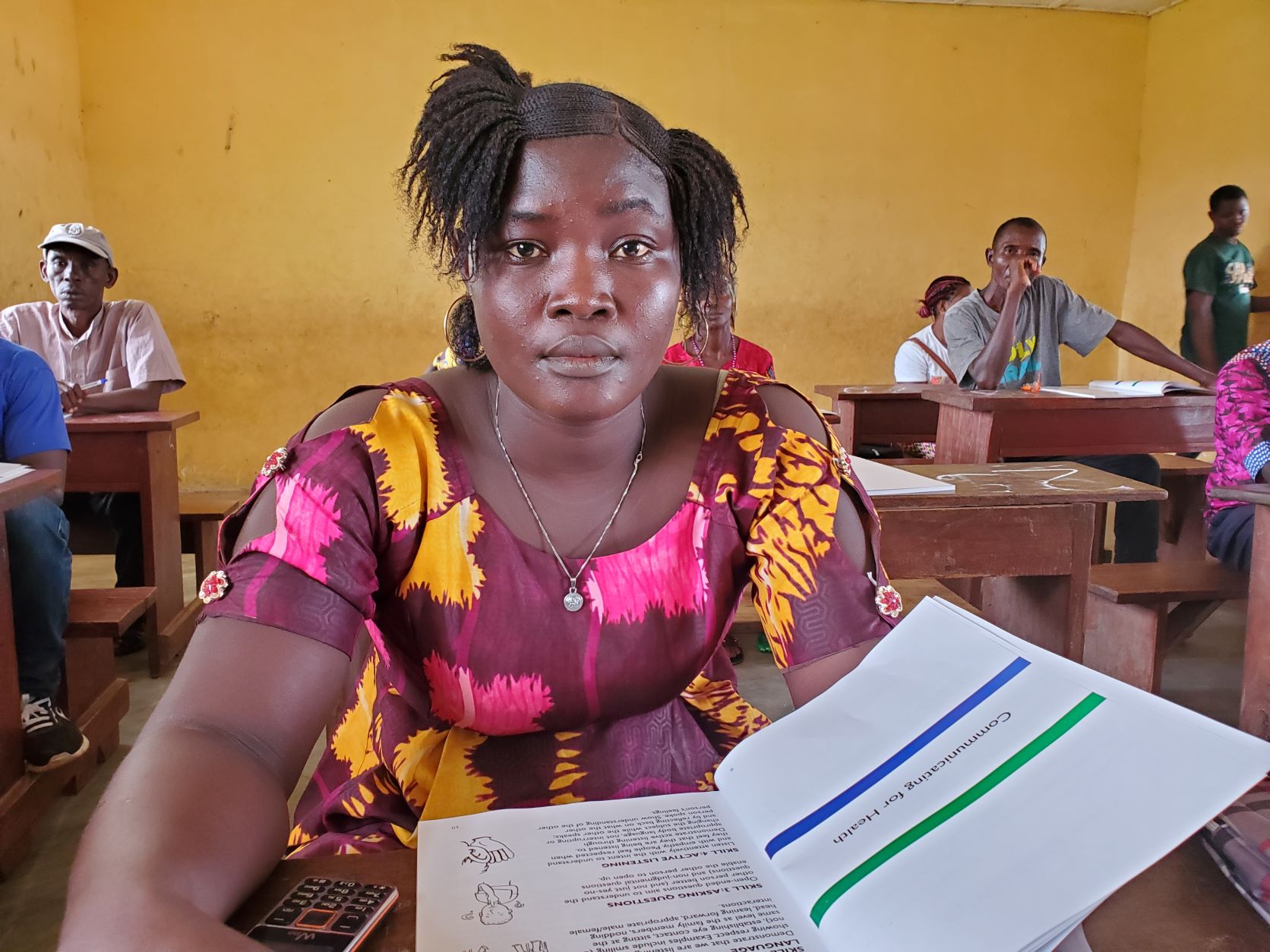
Fatmata Koroma, who works as a community health worker in Sierra Leone.
Women have always been the backbone of community health. They are the ones who show up at dawn to reach the most remote households, who hold the hands of new mothers and their babies, and who carry knowledge and care into places no clinic has ever reached. They don’t just deliver health, but they build it, sustain it, and fight for it. And the communities that recognize women as leaders and invest in their future are the ones where we see health outcomes improve.
As Deputy Chief Program Officer with Last Mile Health, I have no delusions about the state of gender equity in today’s world. Across continents and contexts, women are facing a backslide in rights and healthcare access. As patients, women and their children are at risk of preventable death and often can’t obtain the lifesaving care they need. As providers, women face challenges their male counterparts don’t, from gender-based violence to unequal pay and a lack of opportunities for advancement. And as both health workers and those seeking care, women in rural and remote communities carry the largest share of this burden.
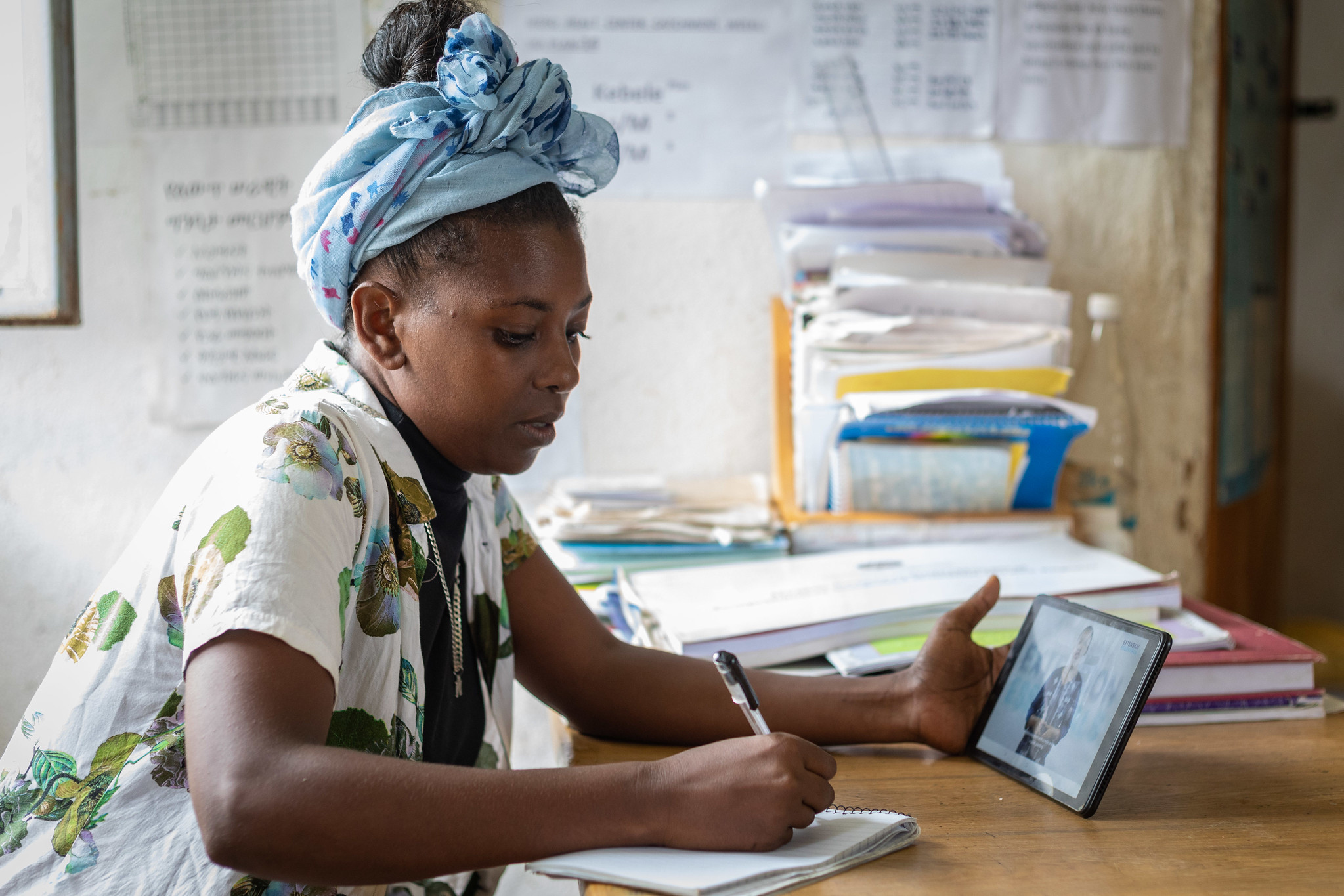
A community health worker in Ethiopia reviews blended learning content on her tablet.
I know all of this, and still I have hope. Every day I work with people who refuse to let discouraging headlines and reduced funding stop our efforts to advance gender equity, from government leaders, NGO peers, and funding partners to the women community health workers delivering care. And already, we have proven solutions to advance both policy and practice. To make those solutions accessible and actionable, Integrate Health and Last Mile Health teamed up two years ago to develop a framework for governments seeking to advance gender equity in community health worker programs. With 16 recommendations policymakers and program leaders can tailor to meet their countries’ areas of need, the framework provides evidence-driven guidance in ensuring women community health workers have the support they need across all stages of their careers: from recruiting women into the workforce, to enabling their success, to retaining them and advancing their careers.
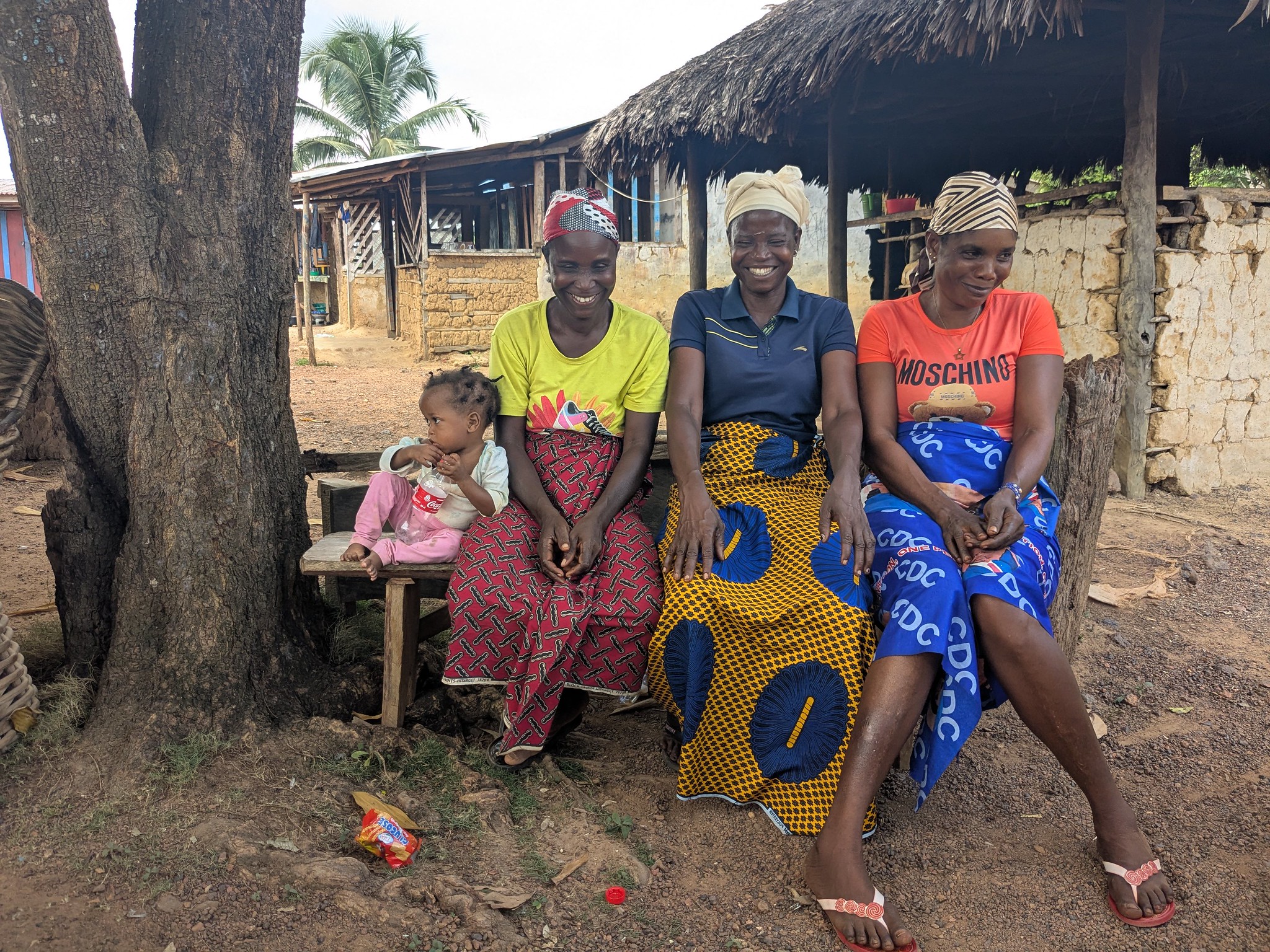
Women attend a mother-to-mother peer support group in Liberia.
And two years later, as I reflect on how the framework has influenced Last Mile Health’s work across our four countries of operation, I am feeling hopeful about the progress we’ve made. We’re seeing tangible wins at the country level when it comes to gender equity, and today, I’m sharing a few of these wins. Drawing from our framework’s recommendations, here is one example from each of Last Mile Health’s programmatic countries of how we’re working in step with our government partners to improve gender responsiveness in national community health programs.
- In Ethiopia, the country’s 40,000-strong all-female community health workforce receives training via the blended learning approach, which combines digital and in-person sessions to reduce costs and improve knowledge and skills. The module in reproductive, maternal, newborn, and child health contains content that equips community health workers to recognize and address gender-based violence.
- This applies Framework Recommendation 8: Community health worker training curriculum includes modules on gender sensitivity and safety to prevent and respond to gender-based violence.
- In Liberia, community health workers facilitate mother-to-mother peer support groups that educate women on healthy practices for themselves and their children. The groups help change perceptions of community health workers and the formal health system, reducing the barrier of entry for women both as recipients of care and as potential future providers, increasing care-seeking behavior and helping ensure more women have the opportunity for recruitment and selection into the community health workforce.
- This applies Framework Recommendation 4: Local community leaders and members, including male partners, actively participate in efforts to change perceptions about community health workers and recruitment practices so women have equal opportunity for selection.
- In Malawi, community midwife assistants receive standardized training to become certified. They work alongside health surveillance assistants to ensure pregnant women in rural and remote communities have access to prenatal care, safe delivery in health facilities, and postnatal care for themselves and their babies. The community midwife assistant role offers formal career opportunities for women (who represent the vast majority of midwives) while improving access to care, aiming to reduce maternal and child mortality.
- This applies Framework Recommendation 5: National community health policies include strong selection criteria and requirements that proactively enable the entry of women community health workers into the profession.
- In Sierra Leone, nationwide geospatial mapping is equipping the Ministry of Health to build a comprehensive registry of every community health worker in the country, including critical information such as their gender and catchment area. Understanding the gender balance of the community health workforce will enable program leaders to work toward a more gender equal workforce, informing inclusive recruitment, training, and retention of women community health workers.
- This applies Framework Recommendation 3: National digital systems maintain records of community health workers (e.g. a registry) and track this data, disaggregated by gender, to inform inclusive planning and programming.
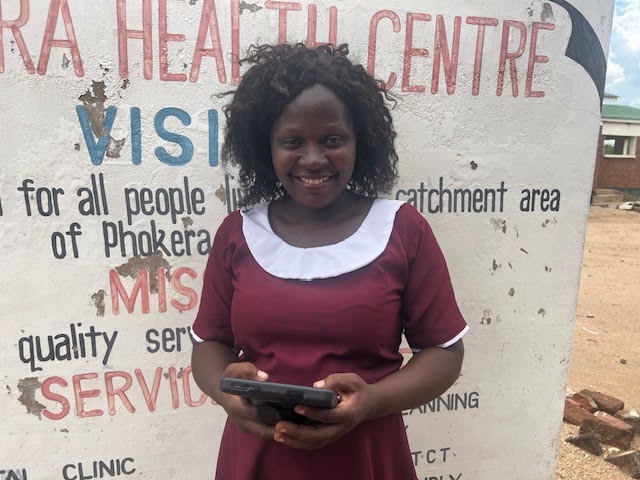
Agness Alfonso, a community midwife assistant in Malawi.
Community health worker programs are our best bet in advancing universal health coverage, and more and more leaders in government, philanthropy, and policy are recognizing this. As we push to make community-led primary care the norm, we must center women in both advocacy and program design. Gender equity won’t happen on its own: we must build it into programs at every step, ensuring women’s healthcare is prioritized and women healthcare workers are protected. In the face of eroding rights and reduced funding, this intentional focus is more important than ever.
We know what it takes to build gender-responsive community health programs that keep women community health workers safe, supported, and equitably compensated. And we know what it takes to bring care within reach for every woman, everywhere. Among like-minded partners and peers, we have reason to be hopeful. Now, it’s time to do the work, together.
In partnership,
Mallika Raghavan, Deputy Chief Program Officer | Last Mile Health