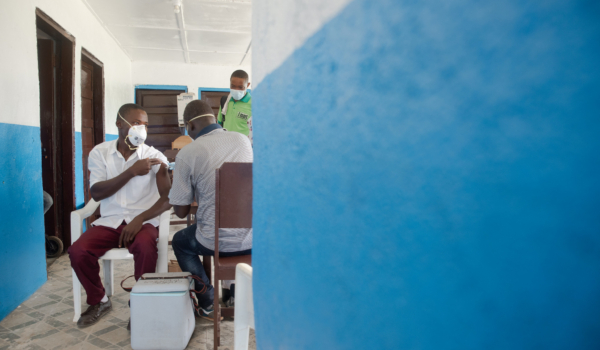
Six years after the COVID-19 pandemic took hold, the Independent Panel for Pandemic Preparedness and Response asserts, “If a new pathogen emerged today, the world remains largely unprepared for it.” Amid the second-largest recorded outbreak of Ebola, we can’t afford to ignore the threat of emerging disease threats—and both COVID19 and the 2014-2016 Ebola epidemic in West Africa offer insights that can equip us to prevent, prepare for, and respond to future pandemics. A growing body of research demonstrates that professional community health workers are key to these efforts: when integrated into strong primary health systems, they can help prevent epidemics from becoming pandemics and maintain healthcare delivery amid disruption. At the cusp of this year’s United Nations High-Level Meeting on Pandemic Prevention, Preparedness, and Response, we must ensure community health workers are named and included in the subsequent Political Declaration and the national and global strategies it will shape.
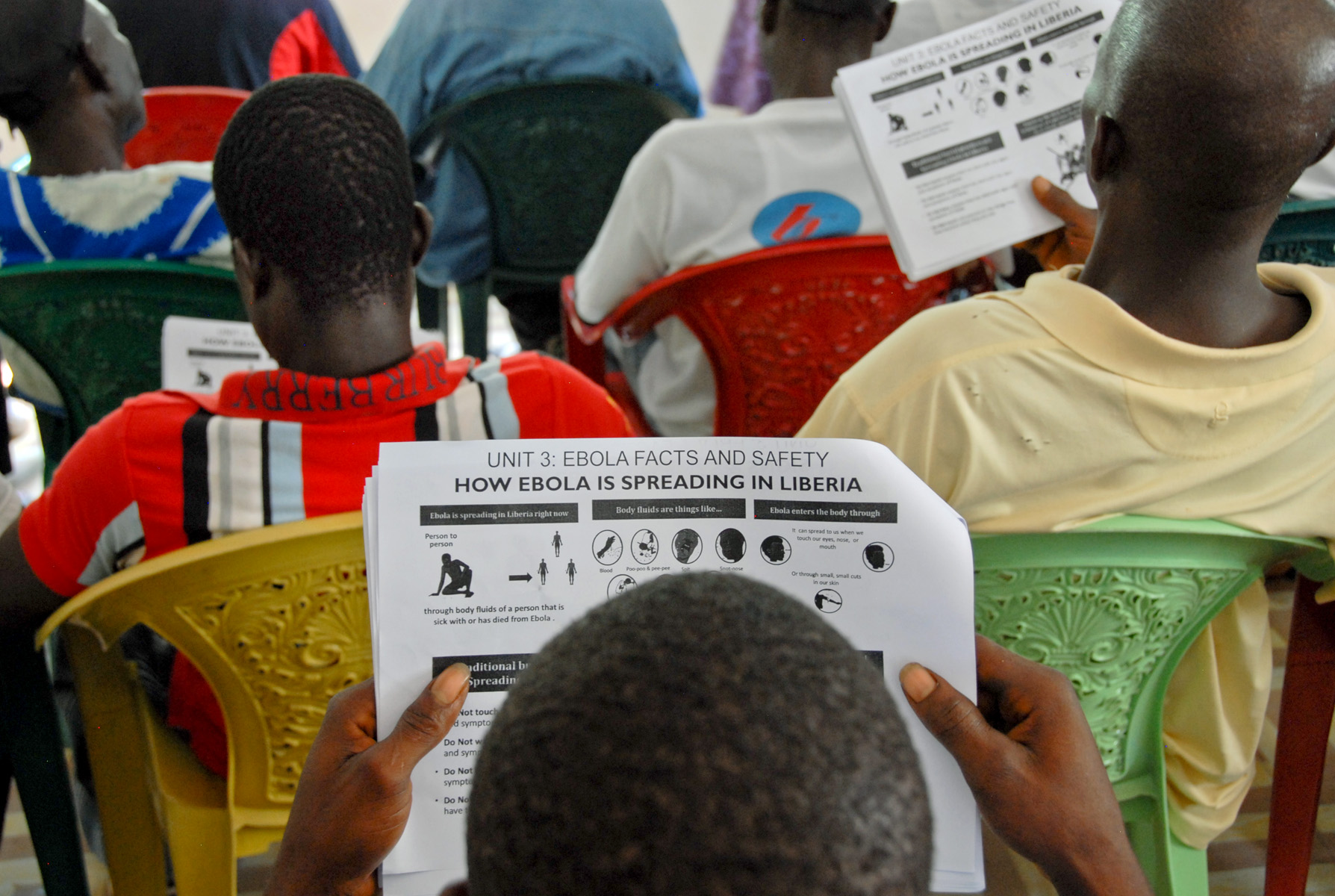
Community health workers review Ebola response materials.
Founded in Liberia in 2007, Last Mile Health accompanied Liberia’s Ministry of Health during the West African Ebola epidemic, training over 1,300 health workers and 38 health facilities to provide a continuum of Ebola-specific services including prevention, referral, and isolation. In addition, we designed and provided training to health workers on no-touch Ebola screening procedures, community education, and active contact tracing. Frontline health workers were able to “keep safe and keep serving,” and in communities where professional community health workers were in place, routine medical services continued throughout the epidemic. While Liberia experienced a threefold decrease in facility-based delivery nationally, in Konobo District, where paid and supervised community health workers were providing services, the facility-based delivery rate remained high, dropping by only three percent. This proven impact in responding to crisis while maintaining essential health services led to the launch of Liberia’s National Community Health Program, which reached national scale in 2024.
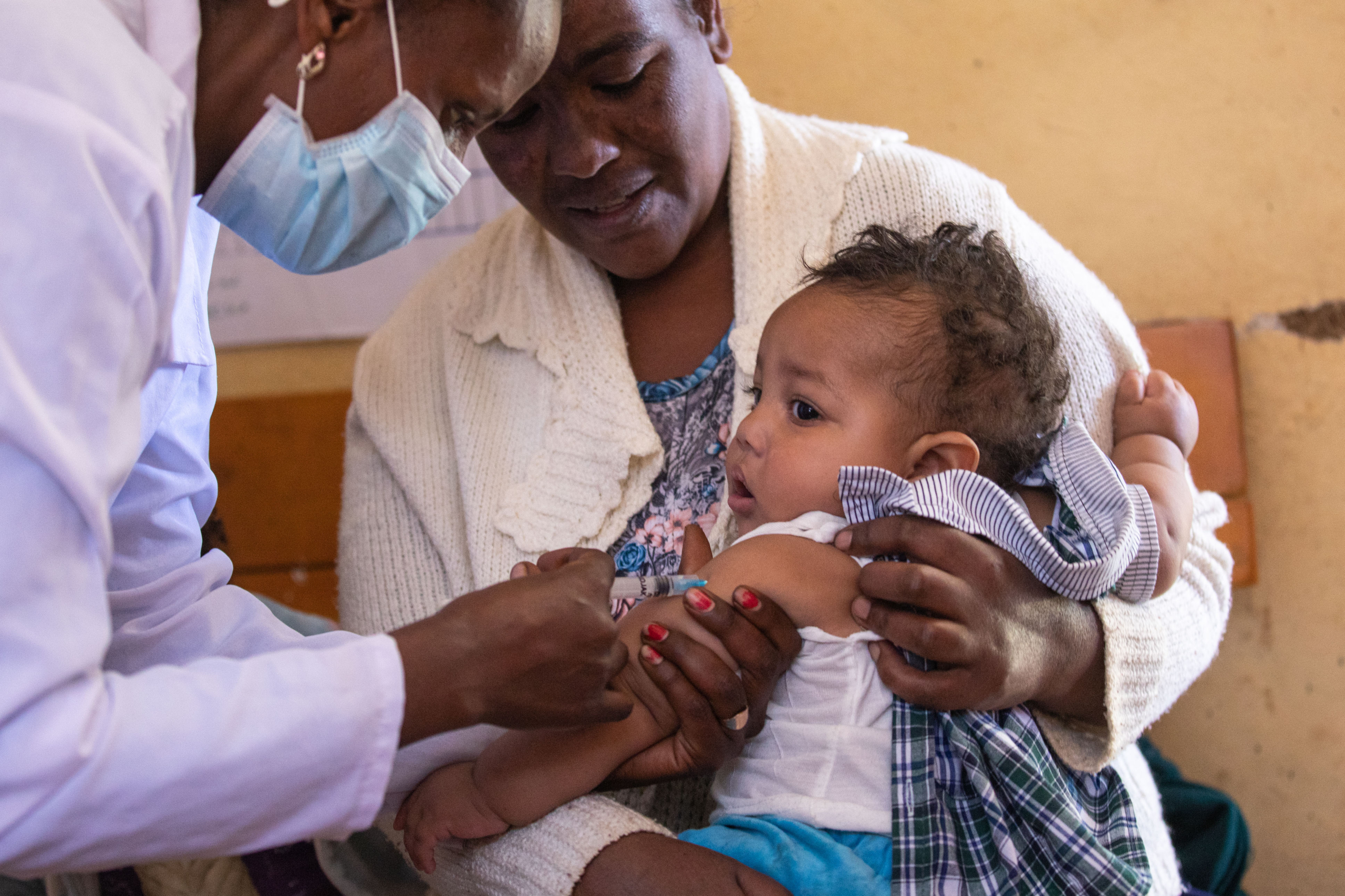
A child receives a routine immunization from a health worker.
Today, Last Mile Health partners with ministries of health in four countries (Ethiopia, Liberia, Malawi, and Sierra Leone), where we build, strengthen, scale and sustain national community health worker programs. In each of these countries, community health workers play a crucial role in preventing, preparing for, and responding to threats from emerging diseases like mpox to endemic diseases like malaria and cholera. Their track record offers valuable lessons in how governments can leverage a strong national community health workforce to prevent, prepare for, and respond to future pandemics—and how global norms can support them to do so.
In a new brief, we share examples, lessons learned, and recommendations for integrating community health workers into effective epidemic and pandemic prevention, preparedness, and response strategies. As the United Nations High-Level Meeting on Pandemic Prevention, Preparedness, and Response convenes, we call on health leaders to name, recognize, and invest in community health workers as an essential component in preventing, preparing for, and responding to future epidemics and pandemics.