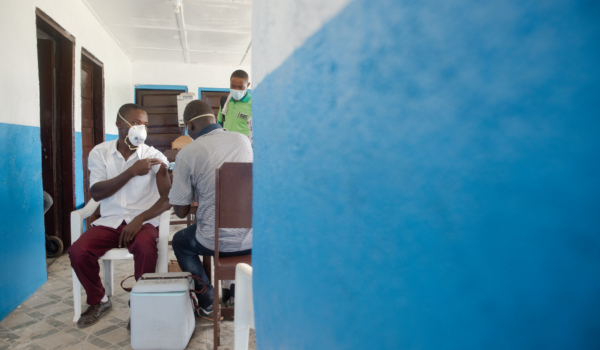
At the 81st session of the United Nations General Assembly (UNGA), Last Mile Health leaders championed the essential contributions of professional community health workers across 50 events and eight speaking engagements.
Across topics from health sovereignty, AI, and pandemic prevention and response, Last Mile Health leaders called for solutions to be designed with and for community health workers, who are critical to ensuring a safer and healthier future.

Community Health Impact Coalition members at UNGA.
To drive health sovereignty, invest in community health workers.
We joined partners for the Community Health Impact Coalition breakfast briefing to celebrate the adoption of proCHW policies by more than 50 countries as well as to rally the next wave of countries to adopt, finance, and implement such policies.
The increasing momentum for nationally led community health programs comes alongside a push for increased health sovereignty. We were proud to join the Accra Reset as they launched A Sovereign Future for Health with their ten recommendations for reforming the global health architecture.
Achieving the vision of health sovereignty will take time. It will require re-allocating domestic resources, securing smart investments from funders who understand governments are best positioned to determine how to leverage those investments, and partnering with technical experts who can provide expertise in designing sustainable systems. Examples from our own work demonstrate it is possible — and proven.
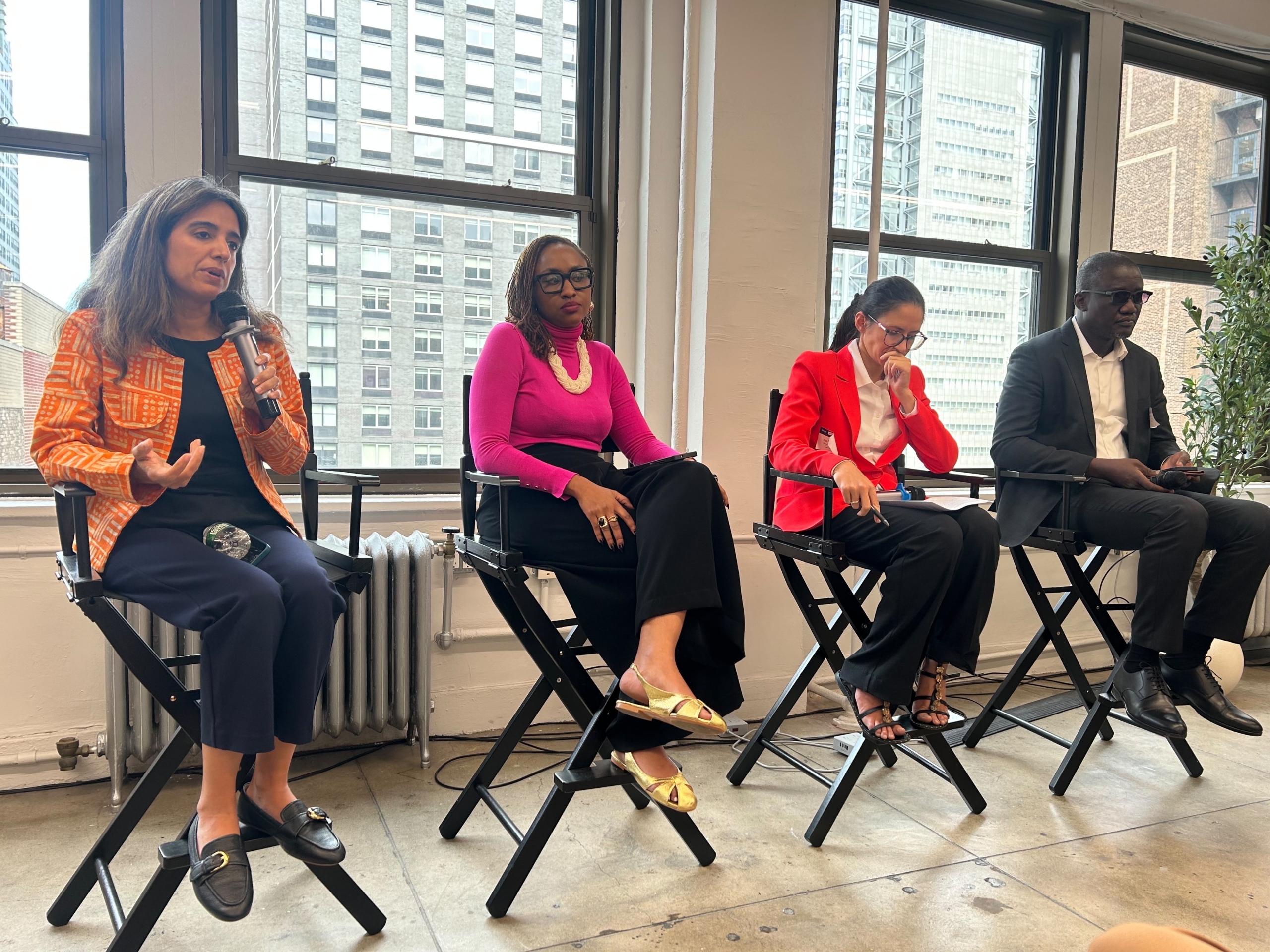
Divya Nair speaks on a panel during UNGA.
AI tools, when responsibly deployed, can help community health workers deliver better care.
Conversations about AI were omnipresent throughout the week, exploring both its incredible potential and the need for its responsible deployment. Dr. Divya Nair, Last Mile Health’s Chief Technical Officer, joined several panels to offer insights into our work equipping Ethiopia’s health extension workers with AI-powered support through HEP Assist.
She highlighted how close government partnership has been key to the initial success of the project, allowing us to pilot at a scale large enough to glean valuable insights, course-correct as needed, and ensure speed and quality of care are considered in tandem. She also emphasized considerations for designing AI tools for last mile reach: small language models that can function in low bandwidth environments, accessibility in local languages, and more.
AI is a rapidly evolving tool that is already having a robust impact on access and equity. As we look forward, Last Mile Health is committed to building tools with and for the people they are intended to serve: the community health workers whose expertise, trusted relationships, and resiliency remain irreplaceable.

Mardieh Dennis at UNGA.
Community health workers are the front line in pandemic prevention, preparedness, and response.
This year’s United Nations High-Level Meeting on Pandemic Prevention, Preparedness and Response came amid the second-largest recorded outbreak of Ebola, a reminder that the world remains largely unprepared for the next pandemic. Last Mile Health’s Senior Director of Technical Services, Dr. Mardieh Dennis, attended the high-level meeting to call on the highest level of leadership to safeguard national and global health security by equipping community health workers as part of the health workforce.
Community health workers are essential to driving a healthy future for all.
“A CHW is an indispensable part of the health system. They are the connection between the health system and communities.” – Dr. Sania Nishtar, CEO of Gavi, UNGA 81
The dialogue of delegates at UNGA81 continued to demonstrate that whether the challenge is pandemic preparedness, crisis response, or access to every day care, community health workers are an essential part of the solution. They provide critical services and serve as a trusted bridge to the health system.